Transforming a public market into a
community health hub in Cuenca
City: Cuenca, Ecuador
Year: 2025-2026
Status: Pilot Project Implemented
Local partners: (Fundación Los Fresnos), Novo Nordisk / Cities for Better Health
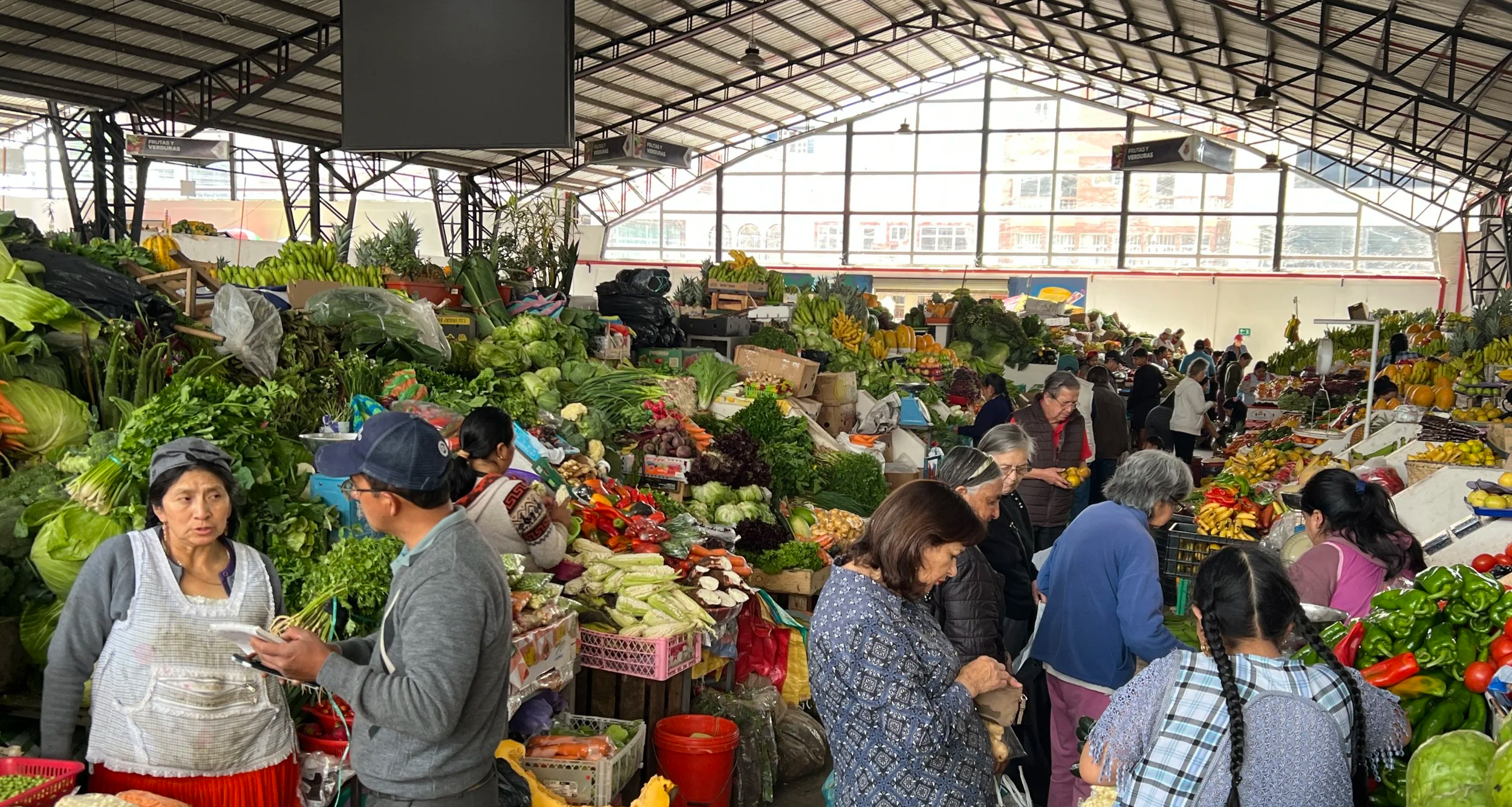
The 12 de Abril Market is one of the city’s seven municipal markets. It is as an important source of affordable food and daily goods for middle- and lower-income families in Cuenca.
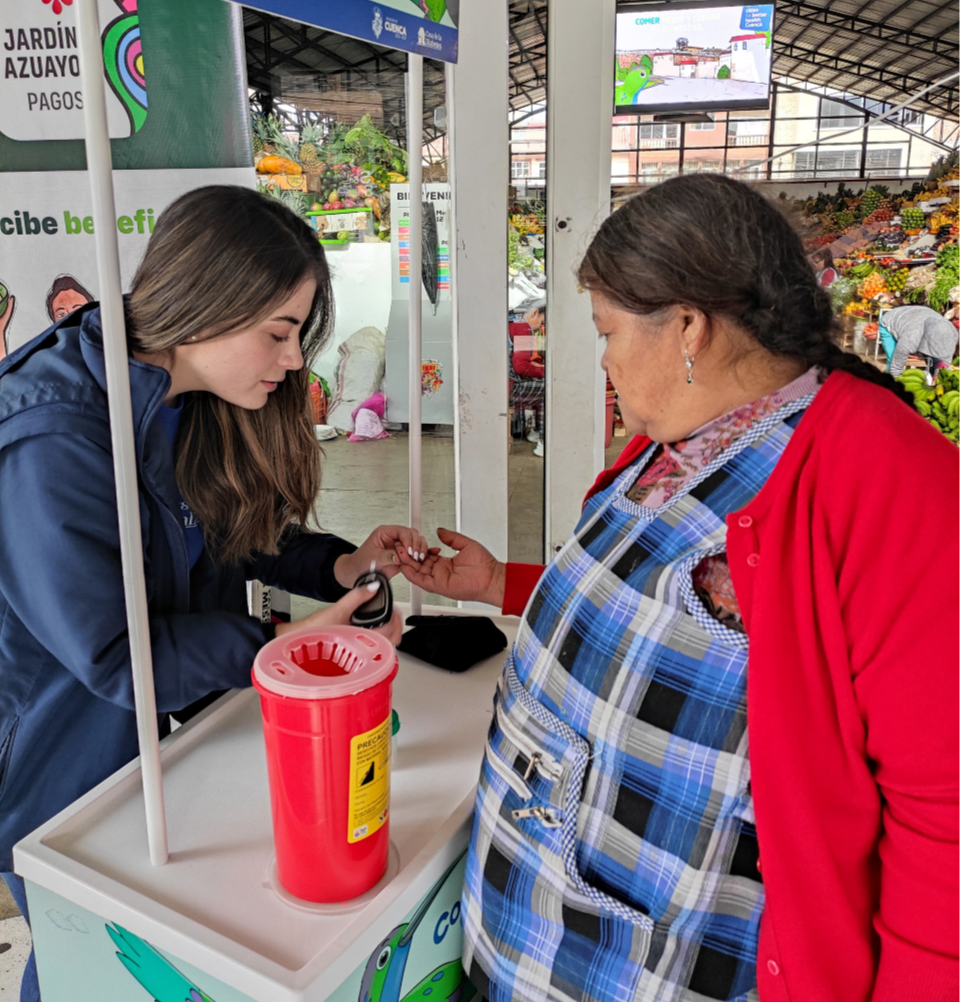
Casa de la Diabetes has worked closely with vendors and management of the 12 de Abril Market to strengthen the health and well-being of the surrounding community through the Cities for Better Health program.
Markets are at the heart of public life in Cuenca, Ecuador. Gehl partnered with Casa de la Diabetes through Novo Nordisk's Cities for Better Health initiative to study how the built environment of the 12 de Abril shapes the health behaviors of the vendors and customers who pass through it every day.
The Challenge
Strained vendor working conditions and underused public spaces are barriers to healthier habits
Cuenca has established itself as a national and regional leader in creating healthy urban environments. Since becoming Ecuador's first certified Healthy Municipality, the city has invested in clean water, waste management, green space, safe mobility, and public safety. Yet despite this progress, chronic disease remains a growing challenge: 1 in 22 people in Cuenca has diabetes.
This challenge is especially visible at the 12 de Abril Market. Vendors face long workdays in strained postures, have limited knowledge of safe food handling, and lack time or spaces for physical activity, putting them at heightened risk for chronic health conditions. More than half rarely go for medical checkups; nearly a third have already been diagnosed with a chronic illness.
In 2024, Cuenca joined Novo Nordisk's global Cities for Better Health (CBH) network to address these challenges at the neighborhood scale. Casa de la Diabetes (Fundación Los Fresnos) leads implementation, coordinating local stakeholders and delivering food handling training, health fairs, and community events at the market.
However, there was limited understanding of how the market's physical environment and urban context influence vendors' lived experience and health habits. Gehl, acting as a strategic partner to Novo Nordisk and a technical advisor to participating CBH cities, was engaged to complement this work by studying how the market's built environment affected health-related behaviors — an aspect not previously considered. The goal: to transform the 12 de Abril Market into a health hub that supports healthier eating habits, encourages physical activity, and strengthens well-being for both vendors and customers.
Quick facts
Foodscape assessment
Studying how the built environment affects health behaviors at the market, with a focus on vendors.
Recognizing that multiple factors influence healthy eating and lifestyle habits, Gehl set out to support Casa de la Diabetes's ongoing work by exploring the lived experiences of people buying and selling food at the market. The study placed particular emphasis on vendors, who were identified as especially vulnerable to adverse health outcomes. The goal was to understand how food availability, the built environment, and everyday human behavior interact to shape health-related decisions — and to identify design or programmatic interventions that could respond to the barriers found. The research focused on two questions:
What are the barriers to purchasing healthy food at this market? Specifically, what challenges do vendors face in selling healthy options?
What underlying challenges do vendors themselves encounter in maintaining a healthy lifestyle, including both diet and physical activity?
Gehl spent a week on site speaking with vendors, customers, and local project partners, and collecting observational and spatial data about the market and its surrounding neighborhood. The team also met with key health stakeholders in Cuenca to understand the city's priorities for achieving the Healthy Market certification and how an intervention in the market could help advance that goal.
-
To understand daily life in the market, the team recorded pedestrian flows, space use patterns, and distribution of activity inside and outside the market across different times of day.
-
The team evaluated the built environment of the market for comfort, safety, legibility, access to shade, seating, and quality of the arrival experience. We also visited four other markets in Cuenca to understand the opportunities and challenges that face public markets across the city, and some of the food places that surround the market, paying attention to the kinds of foods available.
-
The team spoke directly with vendors and customers to understand their daily routines, food habits, and perceptions of the market environment.
Fifty five percent of people surveyed identified challenges related to the experience and quality of the built environment as a barrier to accessing healthy food. Furthermore, 50% of surveyed residents shared that they don’t believe food impacts their health.
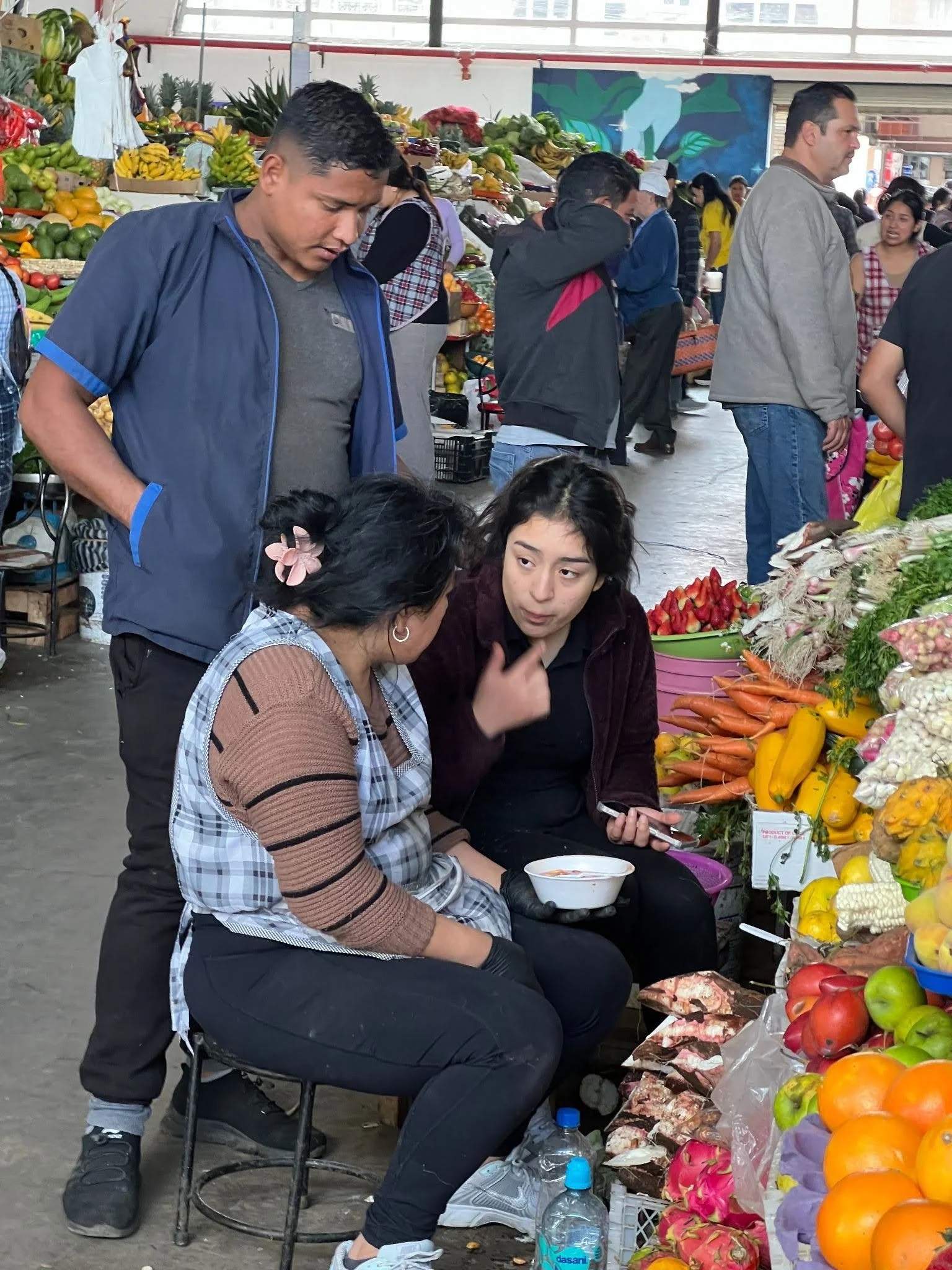
Many vendors shared that they neither have the time nor adequate spaces to rest during their workday.
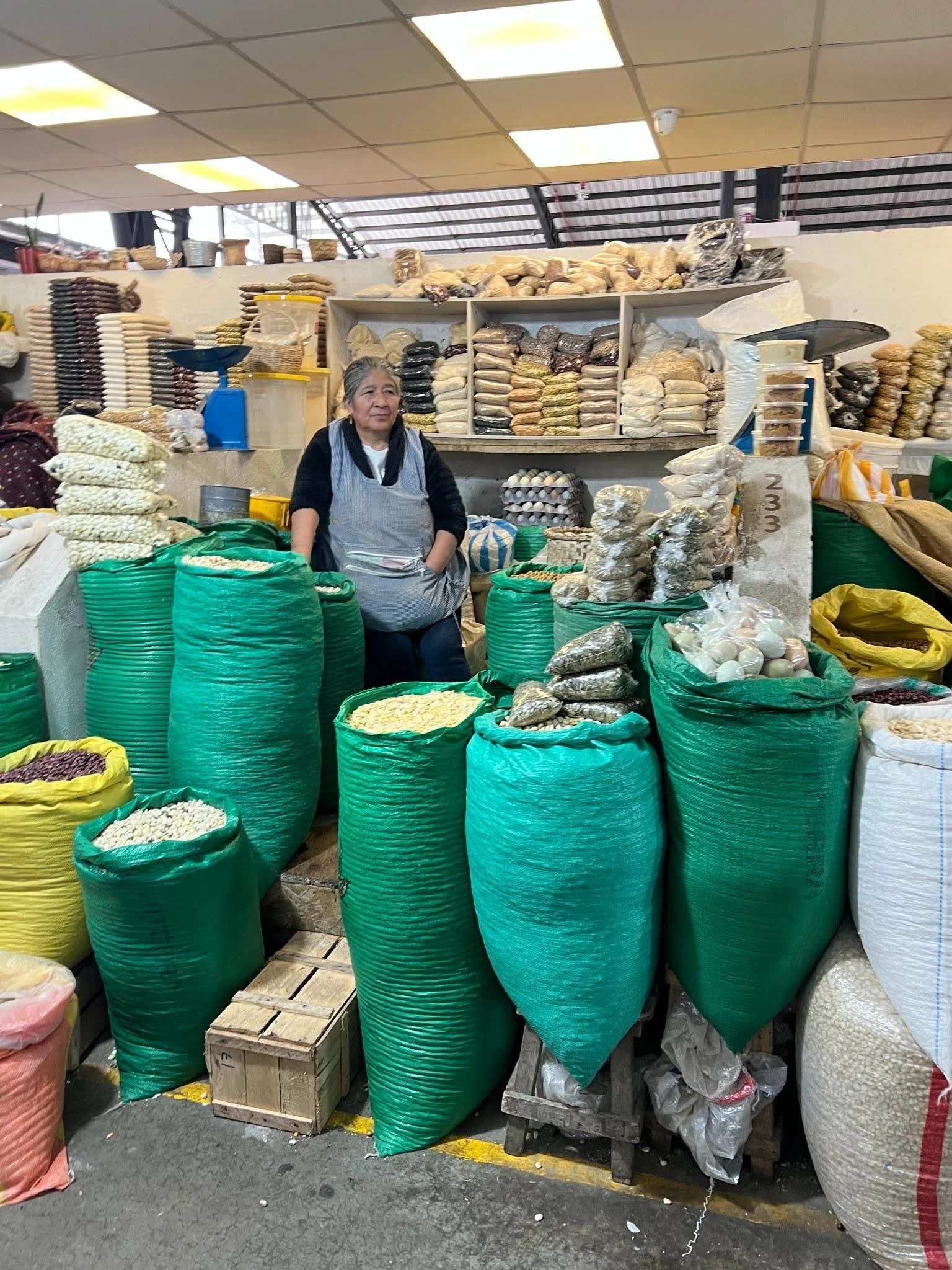
Several vendors placed cardboard or wood boxes on the ground or paid to install wooden platforms and planks to protect their feet from the cold.
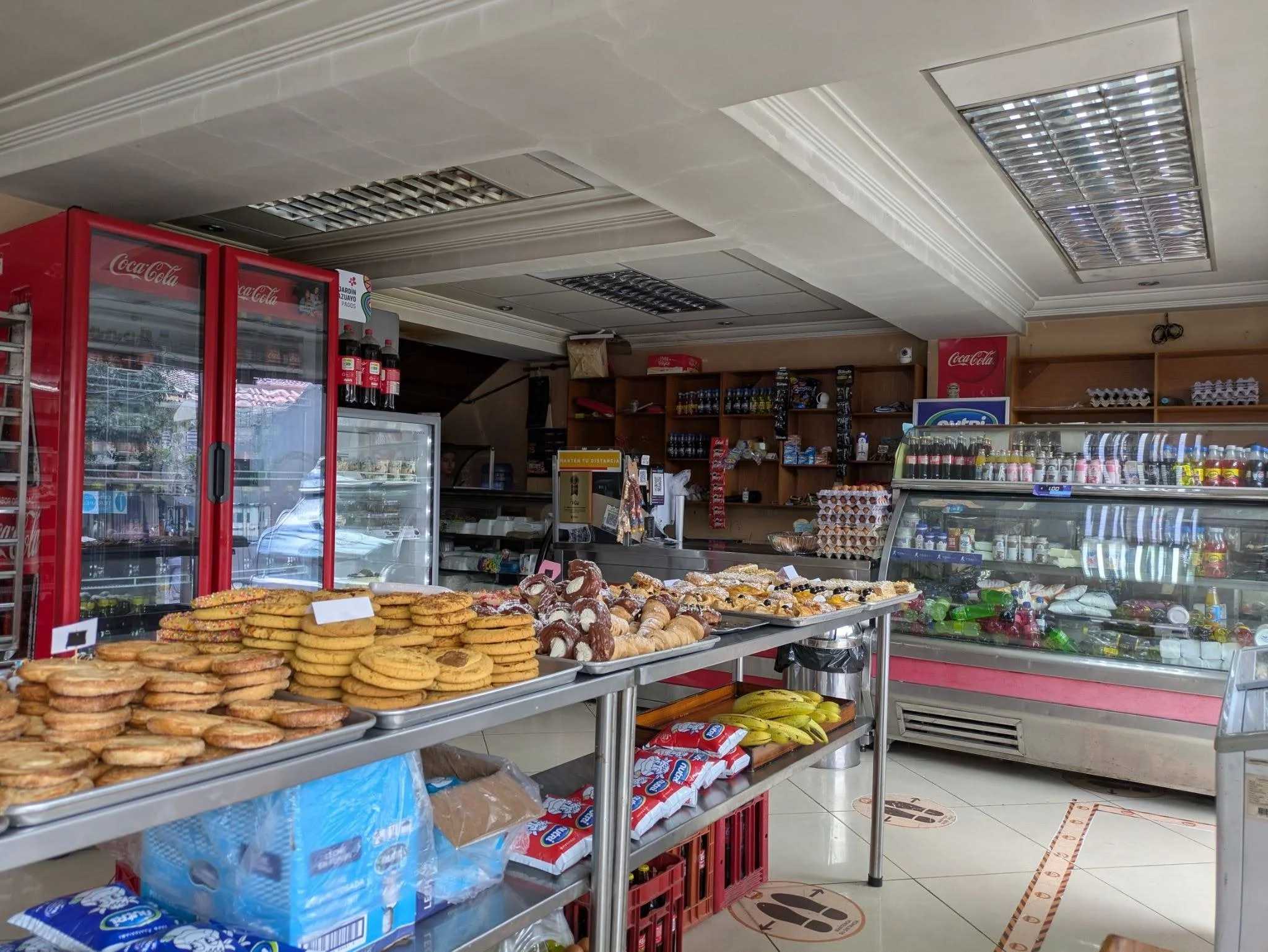
Food vendors in the streets surrounding the market primarily sell processed foods, reinforcing the market’s role as one of the neighborhood’s main sources of fresh and healthy ingredients.
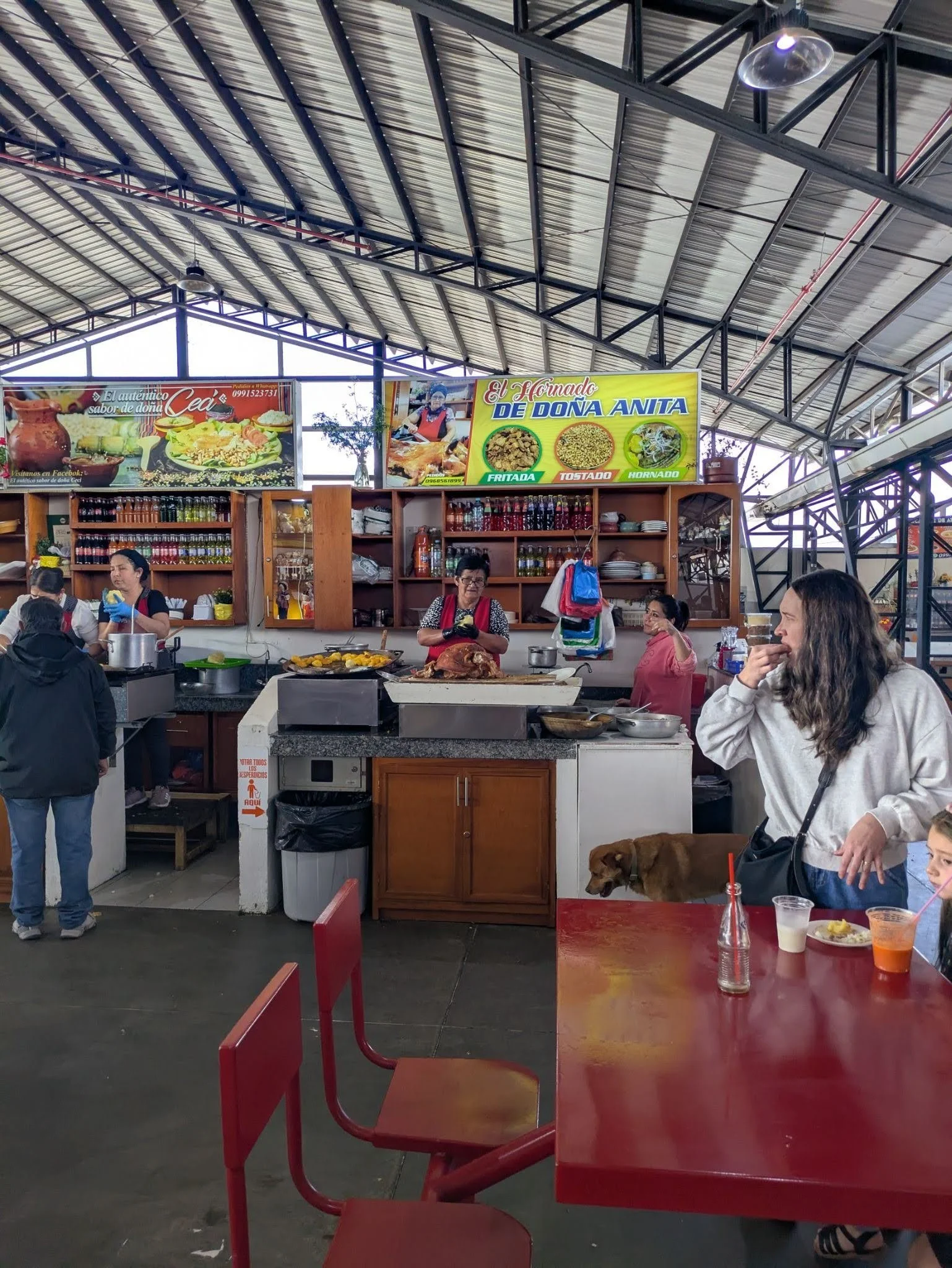
The two main areas for sitting and eating at the market sell very little processed food, mostly traditional food that celebrates the cultural patrimony of the region.
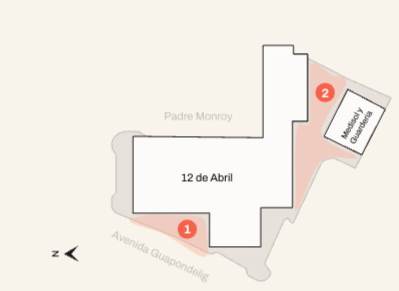
Synthesis of key findings
The 12 de Abril Market is central to neighborhood life but faces challenges in encouraging healthy habits for both vendors and consumers.
Vendors are the lifeblood of the 12 de Abril Market, yet many face real obstacles to maintaining their own health, and many of these obstacles trace back to time and economic pressure. Nearly half feel that competition and lack of demand limit their ability to sell enough to turn a real profit, and that perception keeps them tethered to their stalls. Only 8% reported spending any time in public spaces outside the market, and 88% said they don't step away from their stall at all during the workday. Many feel obligated to eat right at their stall so they don't lose customers.
Since most vendors spend at least 12 hours a day at the market, time becomes the single biggest barrier to a healthier lifestyle. 80% report they don't get enough exercise; when asked what was stopping them from eating well, 60% pointed to time or work, and the same answer came up when asked what was stopping them from exercising.
The physical environment compounds the problem. 30% of vendors identified their stall and work area as their main challenge during the workday — and during the team’s spatial mapping of the market, they found that only 25% of vendors in the fruit and vegetable section had seating with a backrest. The challenges extend beyond vendors themselves: their children were everywhere in the market but had nowhere to play, often improvising in unsafe ways near the stalls. Oftentimes, they were the only people spending time in the public spaces around the market too.
While the market offers fresh, healthy ingredients, there are few opportunities to eat a healthy meal on site.
The 12 de Abril market overflows with fresh fruits, vegetables, and other local ingredients, but ironically, it's hard to find a ready-to-eat healthy, balanced meal inside the market itself. Though it isn't processed food, most of the prepared offerings are traditional dishes that are mostly fats, salts, sugars, and carbs, and don't include enough vegetables or other components recommended by the Ecuadorian food guide.
Part of this comes down to demand. Some vendors shared that healthier dishes (those with balanced ingredients and moderate portions) simply don't sell as well, since customers tend to prefer large, carbohydrate-rich meals. More broadly, markets in Ecuador today are seen as places to enjoy regional staples like hornado (roast pork), not as destinations for healthier options. The cultural identity of the market makes it harder for healthier offerings to find a foothold, even when the ingredients are right there.
The market could draw more shoppers by inviting life into empty public spaces and improving the arrival experience.
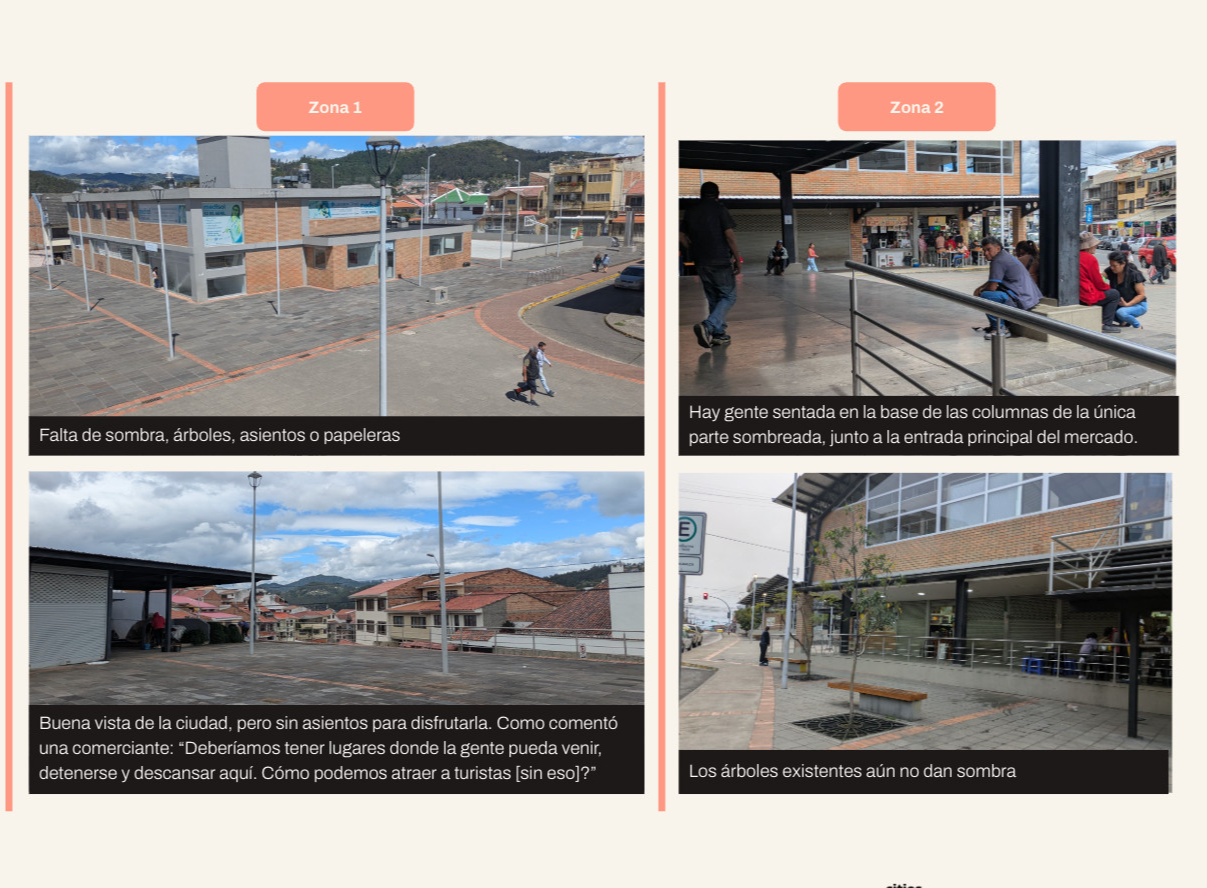
While the market interior buzzes with life during peak hours of breakfast and lunch, the exterior plazas are mostly empty. The large plaza in front of the building functions more as a pass-through than a gathering place — lacking seating, shade, vegetation, and basic amenities like trash cans. Of 800 people entering the market on a Sunday morning, only 21 stopped to spend time in the adjacent plaza spaces. Poor wayfinding to the different sectors within the market and an uninviting arrival experience surrounding the building makes the market miss opportunities to draw in new visitors like tourists.
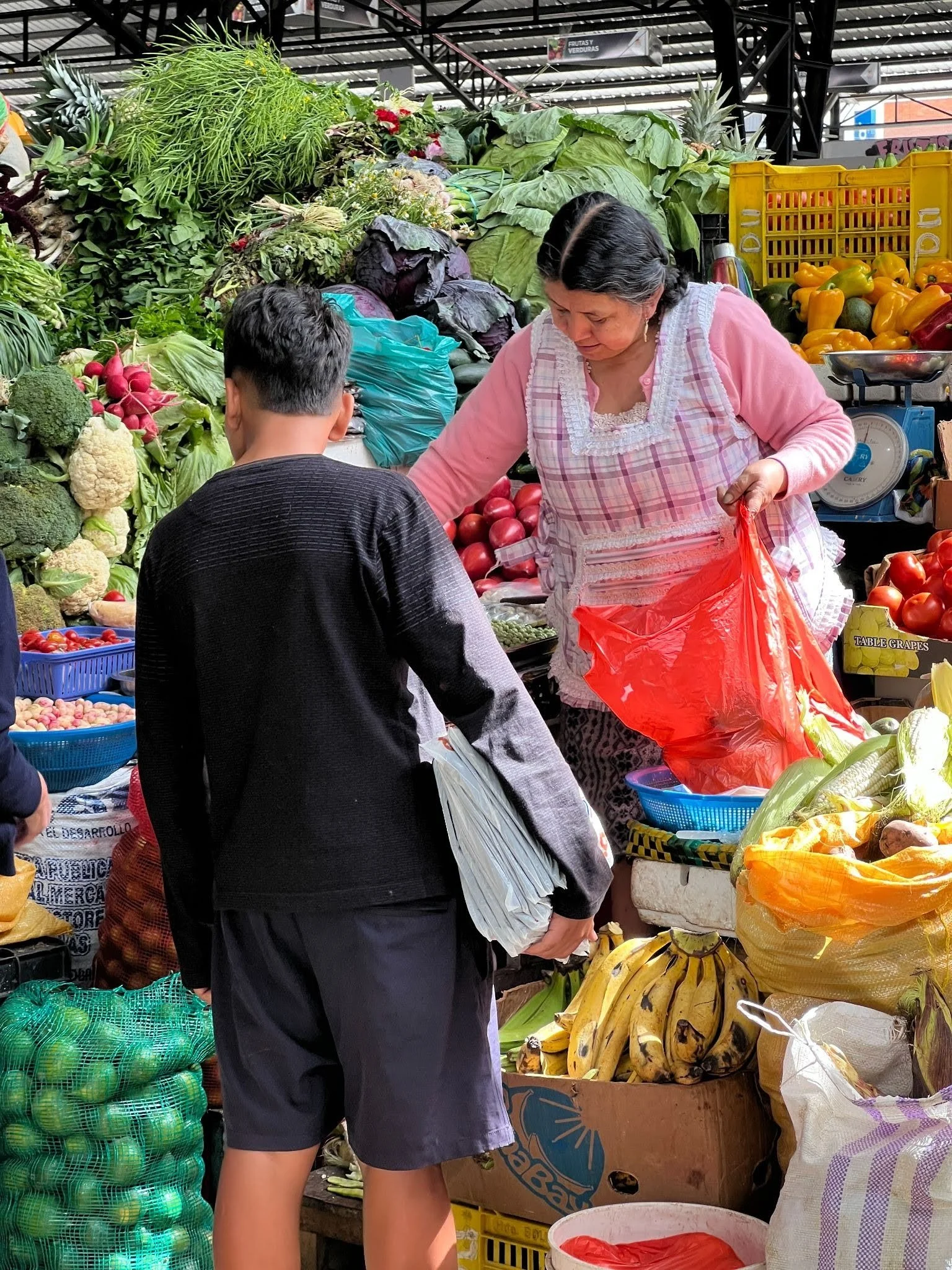
Most vendors are women from families who have worked at the market for generations and who today face long workdays in physically demanding conditions and lack access to health insurance.
Methods Used
Strategic planning & Pilot design
Using public space to draw market visitors and encourage healthy behaviour.
The vision for the project was to create a health hub that encourages better health habits. A core insight from the research shaped the approach: improving vendor income (by attracting more customers to the market) is itself a health intervention. With more stable earnings, vendors are more likely to feel comfortable taking breaks, eating a proper lunch, or stepping away to exercise. While Casa de la Diabetes's ongoing education and training work is changing habits in the long run, the built environment offers another, one that can make the healthy choice the easy choice in everyday spaces.
Based on this, Gehl laid out four areas of intervention in the market area. Many of these operate at different scales from inside the market, to the public space outside, to the scale of the city:
Healthy eating: using the market's space and programming to make it a destination for buying, eating, and learning about healthy food.
Vendor well-being: creating a healthier working environment, with attracting more customers as a central strategy for improving vendors' sense of agency over their own time and health.
Physical activity: using the market as a platform to encourage active lifestyles, including better walking infrastructure and opportunities for vendors to exercise.
Public life: activating the exterior plazas to draw in more visitors, improve the arrival experience, and make the market a more welcoming neighborhood destination.
The team developed small, practical interventions in each of these areas, designed to make healthy choices more accessible and attractive. While they span different scales and formats, many of them converge on a single opportunity: the underused public spaces around the market. By focusing on the public realm, a single intervention can simultaneously bring in new customers (vendor well-being), create room for movement and rest (physical activity), showcase healthy food and vendor stories (healthy eating), and activate empty plazas (public life).
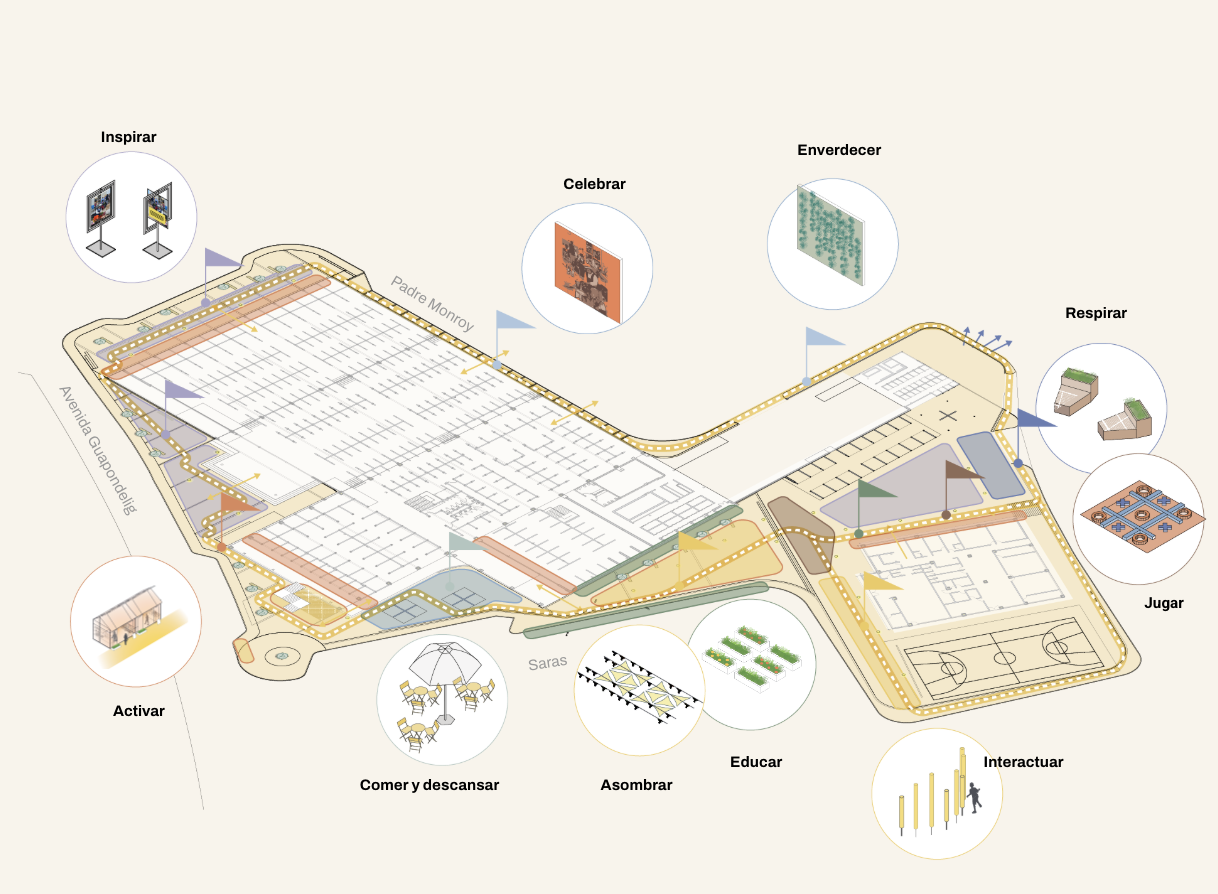
The design proposal is centered on a long term vision for the market surroundings, El Sendero Saludable.
To bring this opportunity to life, Gehl developed a concept called El Sendero Saludable (The Healthy Route): a walkable loop that connects all of the market’s sides to its surrounding neighborhood, reinforces vendors' role in community health through art and cultural and educational programming, and creates opportunities for vendors to integrate physical activity into their daily routines.
Gehl delivered a phased implementation strategy and a design vision for the Healthy Route. To test the concept, Gehl proposed a pilot — La Plaza Viva — sited at an underused plaza near the entrance of the market. The pilot tests the idea of the Healthy Route, attracts new visitors, and creates immediate, visible impact while informing future phases. The concept for the space included a new mural, shade and vegetation, comfortable seating, a play space, an urban garden, and the first segment of the Healthy Route, all vibrantly designed.
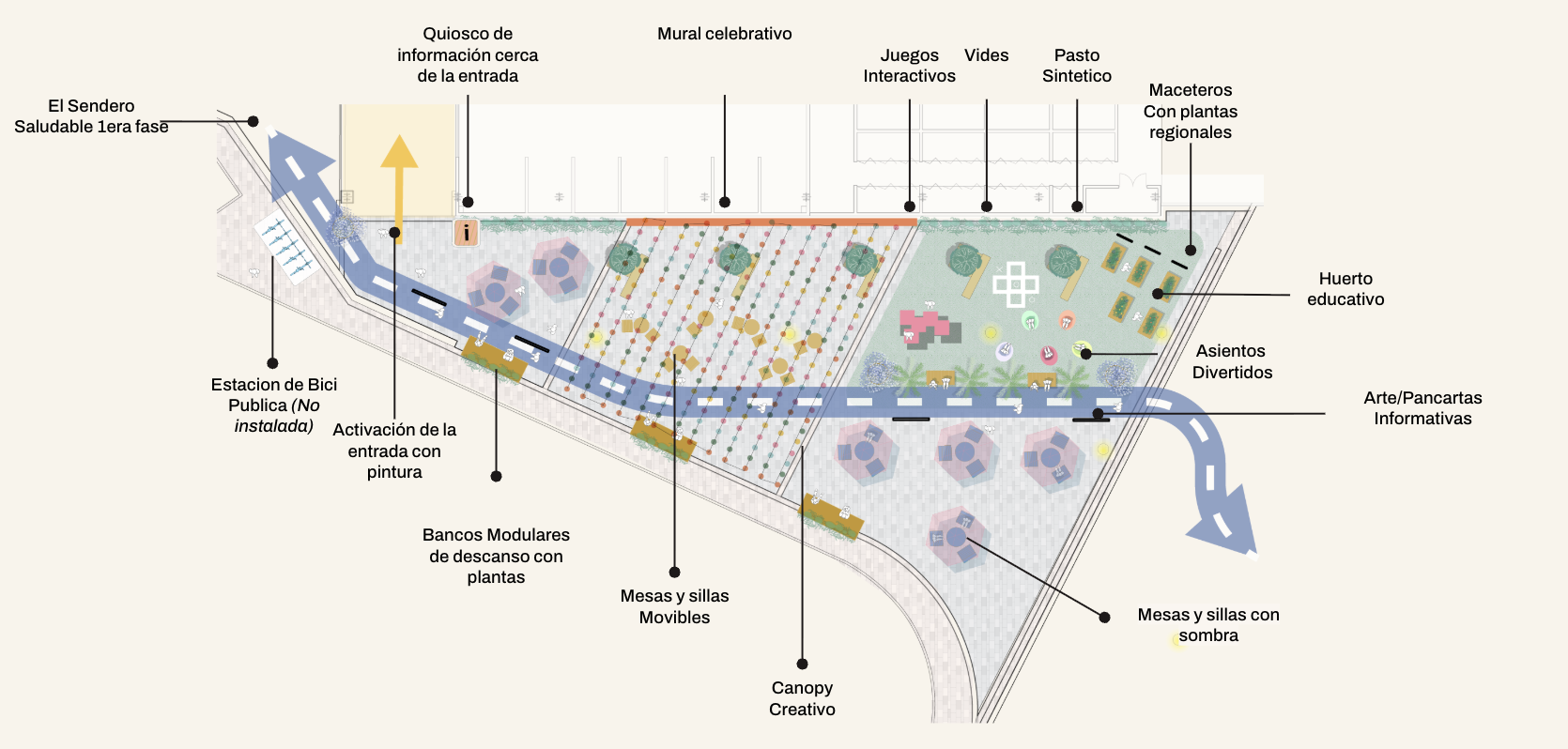
La Plaza Viva tests the first phase of the healthy route (reword)
The objectives of the pilot mirrored the four areas of intervention:
Bring more clients to the market, improving vendors' perceived ability to rest
Welcome people through public space improvements at the lateral entrances
Activate the communal space to offer a place where vendors, families, and neighbors can gather and share activities — for vendors to be active, for kids to play
Celebrate vendors and the role they play in their community's health, increasing public knowledge of their stories
Encourage active mobility (walking or biking to the market) to integrate physical activity into daily routines
To implement the pilot, Casa de la Diabetes partnered with local merchants, artists, architects, and the market association to bring the space to life. The opening of La Plaza Viva was a major event full of programming, health check-ups, healthy snacks, and workout classes.
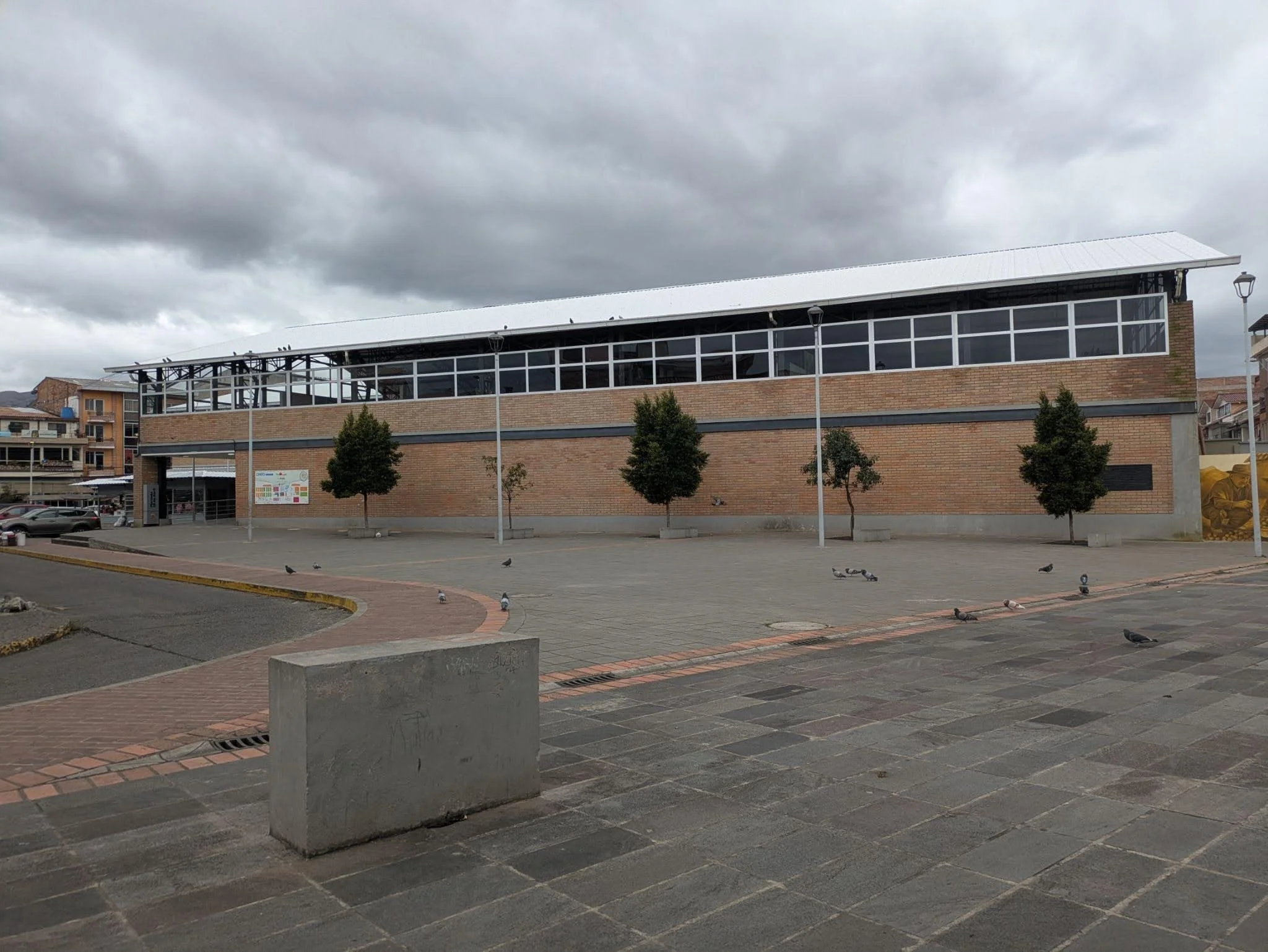
Before the pilot
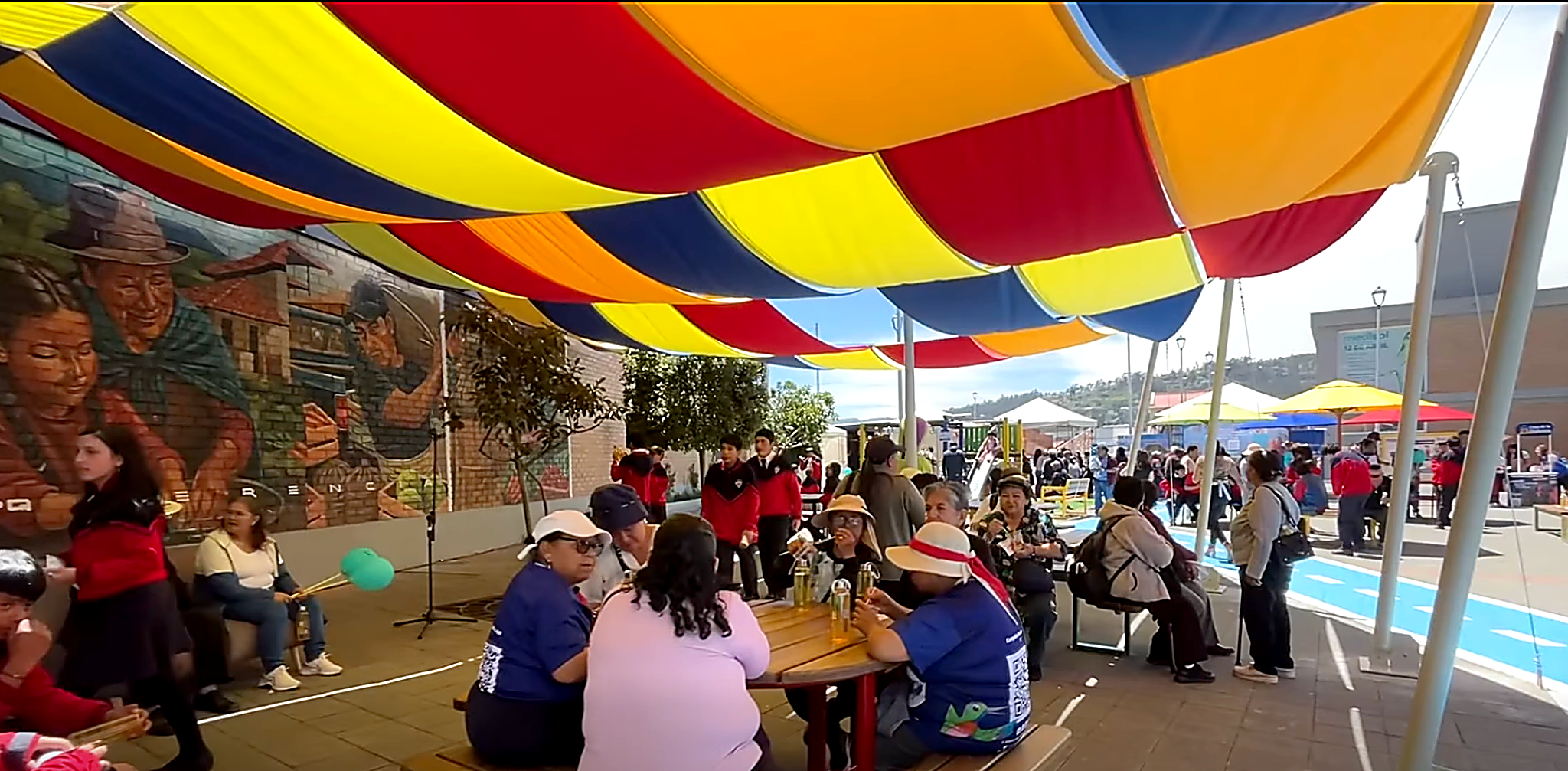
After the pilot, during the opening ceremony
Impact Assessment
One month after opening, La Plaza Viva is already drawing more customers to the market and fostering healthier behaviors
Casa de la Diabetes is conducting post-implementation data collection of space use, along with intercept surveys of both visitors and vendors to gauge perceptions of the space. These results are only the starting point one month after opening: the market's public space has become a lively, inclusive place with the first signs of impact on health, well-being, and vendor sales. Among visitors, 81% feel more inspired to incorporate healthier foods into their diet, and 78% feel more motivated to visit the market since the space was installed. Among vendors, 79% feel more connected to their community and appreciated for their role, 47% perceive improvements in their daily physical activity, and 35% report that their sales have already increased. The space is also drawing a more diverse mix of users, with more women, children, and teenagers visible as people arrive at the market.
These are early results, but they suggest that small, well-placed changes to the built environment can meaningfully shift how a market supports the health of the people who use it every day.
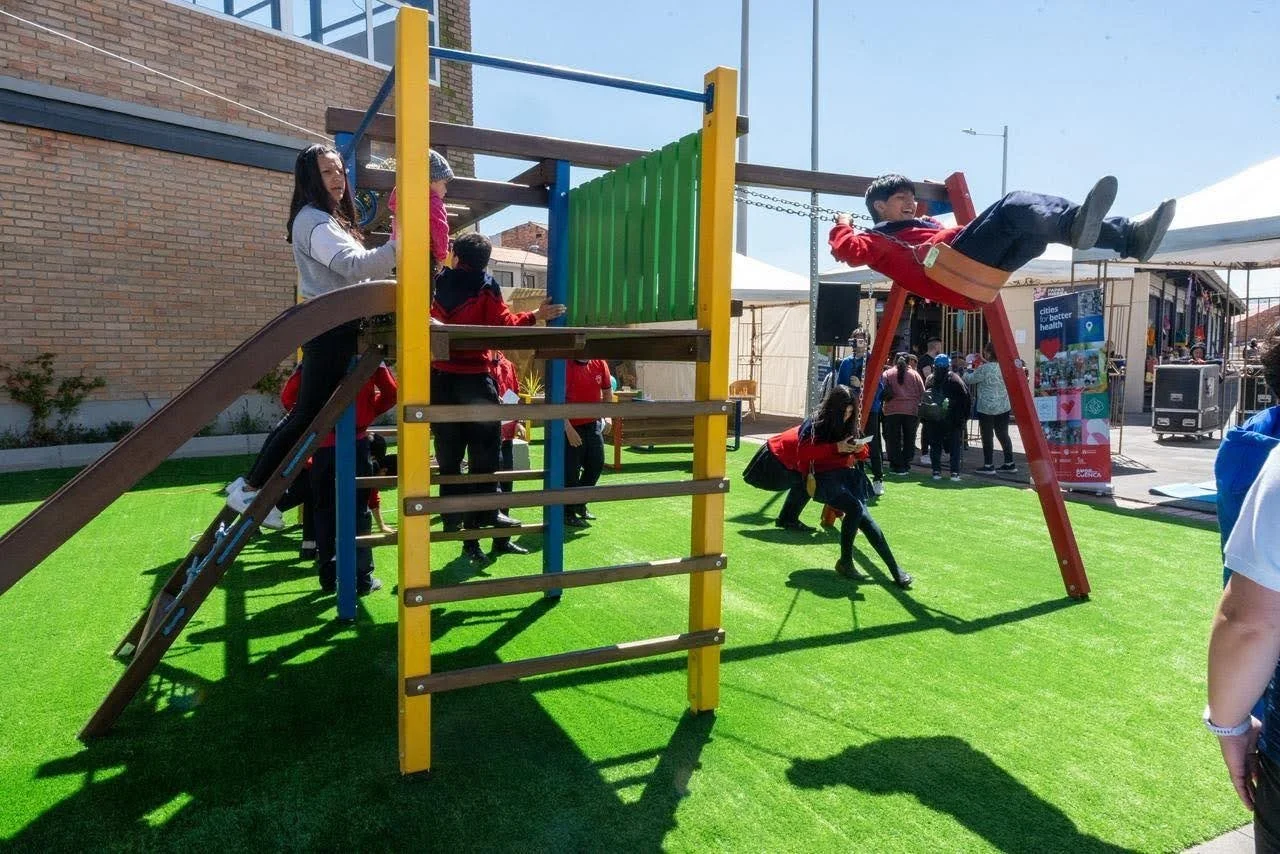
The playing area regularly sees neighborhood visitors and vendor's children engage in the space.
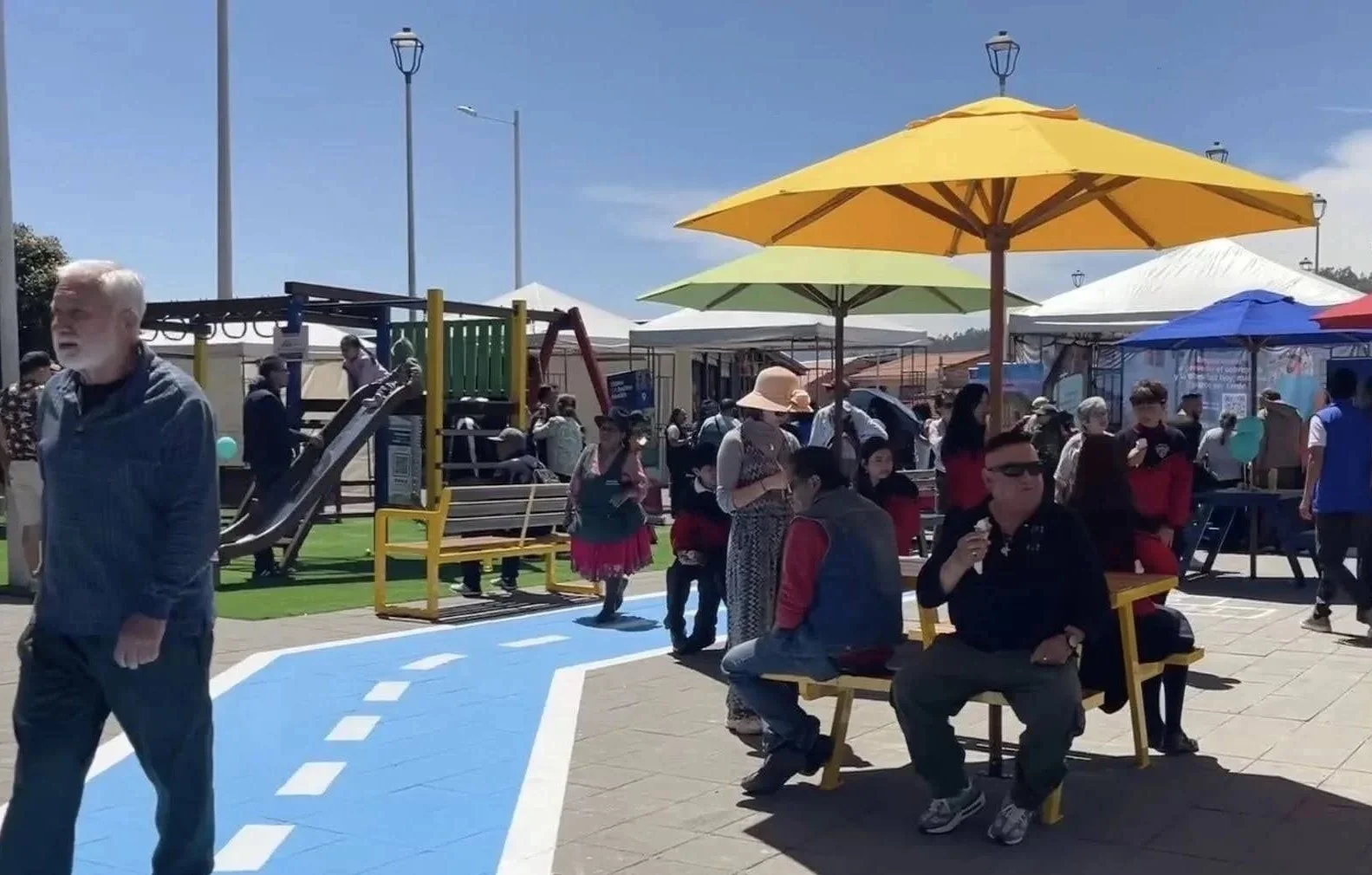
The space includes more shaded spaces for people to share food and refreshments outside next to the walking route.
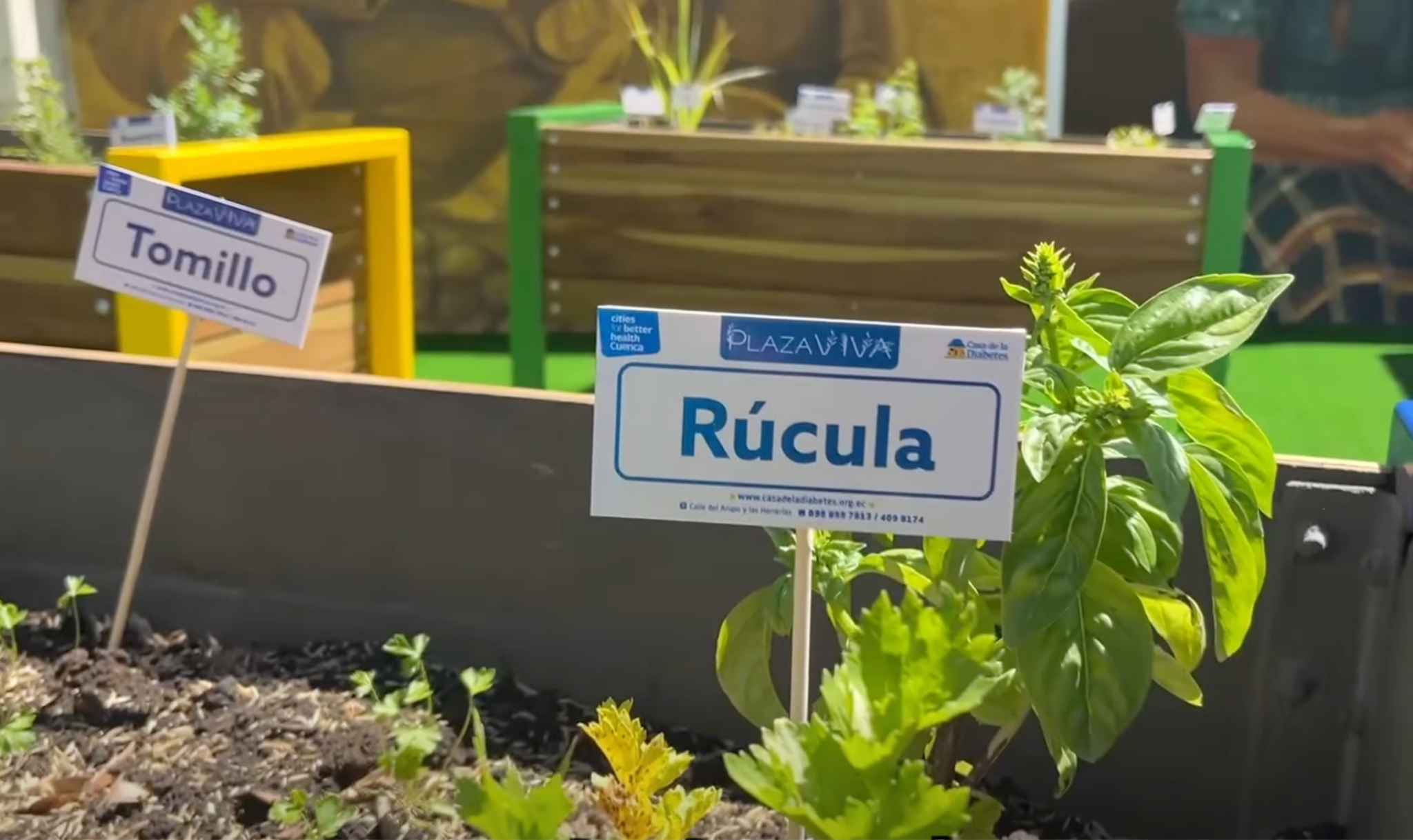
The pilot incudes an urban gardening area with native species that are used for classes with the school and kindergarten nearby.
Want to learn more?
Check out our other case studies or explore the methods used.